
10TH PLACE : TARANGKAHAN
John Nicolo P. Raz and Ma. Jalen D. Tormes
National University – Manila
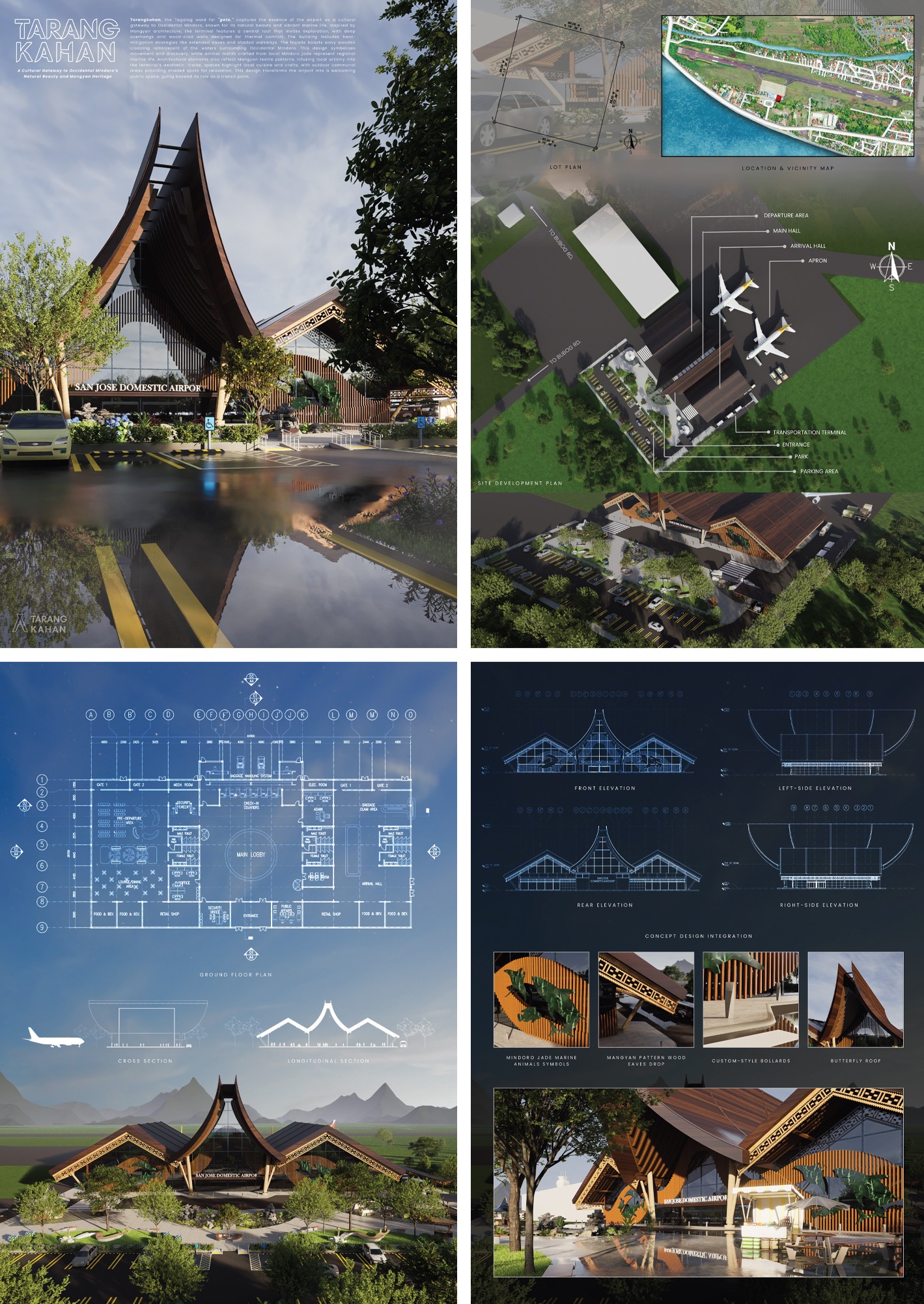
Tarangkahan, the Tagalog word for “gate”, embodies the essence of the airport. It is more than just a transportation hub; the terminal serves as a cultural gateway. This concept
symbolizes the journey and reminds travelers that they have arrived in Occidental Mindoro, a
province renowned for its natural beauty, rich heritage, and vibrant marine life.
The terminal is inspired by Mangyan architecture, reinterpreted in a modern context. The
central roof opens upward, serving as a welcoming gesture that invites visitors to enter,
explore, and fully experience what the province has to offer. The deep overhangs and wood-
clad curtain walls are designed to respond to the south-facing orientation of the site that
provides shade and enhances thermal comfort. The building envelope incorporates heat-
mitigation strategies, including extended eaves, wooden screens, shaded walkways, and
naturally ventilated pathways. These features help reduce direct solar gain and create a more
comfortable environment for passengers both inside and outside the terminal.
The façade features wavy wooden cladding inspired by the waters surrounding Occidental Mindoro, which is recognized as a “marine wonderland”, particularly highlighted by Apo Reef.This wave-like design symbolizes movement, travel, and discovery. Incorporated into the design are animal symbols native to the region, including the manta ray, sea turtles, reef
sharks, whale sharks, beaked whales, and the Napoleon wrasse. These symbols are crafted
from Mindoro jade, a material well-known locally. Additionally, architectural elements such as
wooden eaves and square panel screens draw inspiration from Mangyan textile patterns and
basket weaving, allowing local artistry to be integrated into the building’s visual language.
Inside the terminal, there are spaces dedicated to local cuisine and retail areas that showcase crafts and products sourced from the region. Outside the terminal, public seating and
communal areas are integrated into both the park and parking zones, creating shaded and
comfortable spaces for passengers, families, and the community to gather, wait, and relax.
These outdoor areas enhance the concept of the “tarangkahan,” transforming the airport into
not just a transit point, but also a welcoming public space.